
Foosball Wall Pass vs. Brush Pass
The wall pass and the brush pass are the two fundamental ways to move the ball from your 5-bar (midfield rod) to your 3-bar…
The 5-bar (the row of five men in the middle of the table) is the engine of a great foosball offense.
The 5-bar (the row of five men in the middle of the table) is the engine of a great foosball offense. Mastering foosball 5-bar passing means moving the ball from your mid-field into a scoring position before your opponent’s defense can set. If your 5-bar just shoves the ball forward and hopes for the best, you’re leaving points on the table — literally. These drills will fix that.
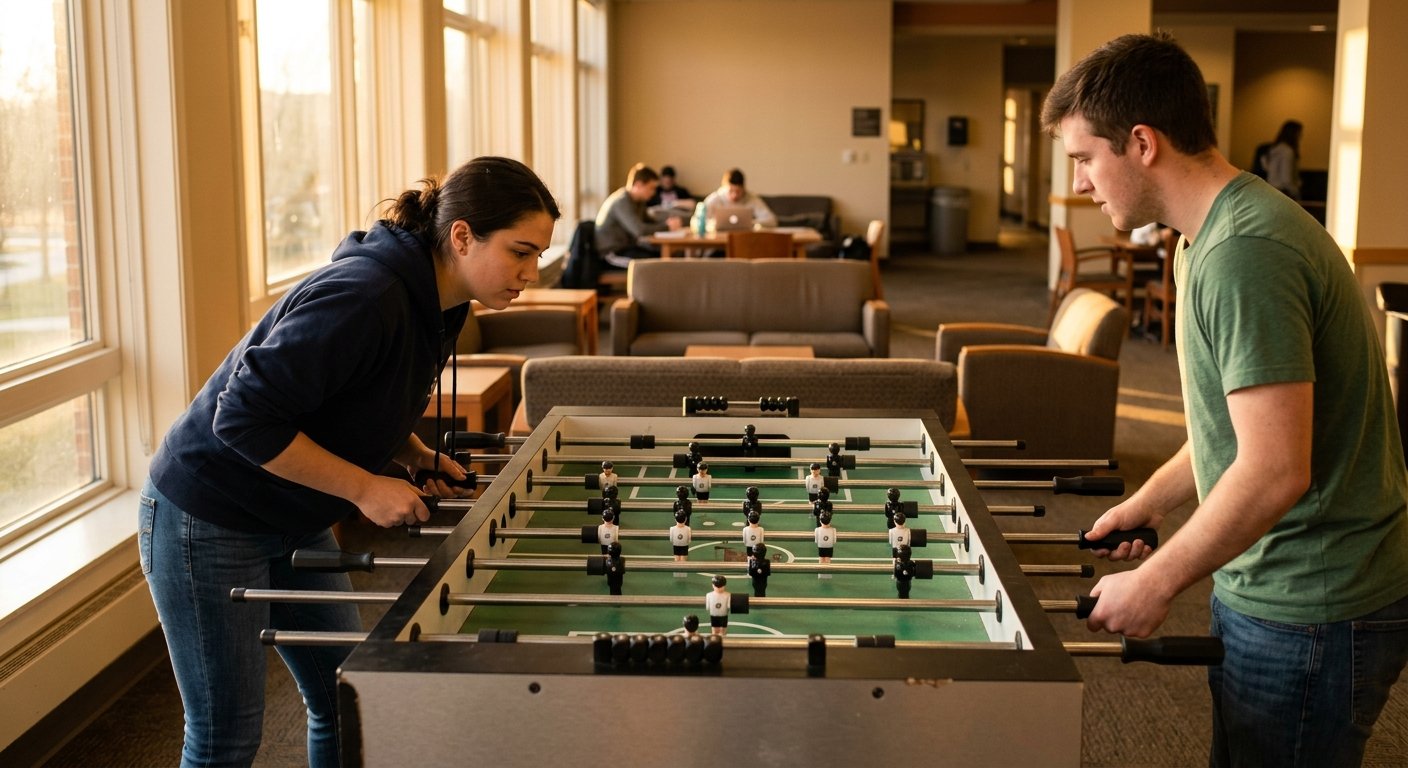
Most beginners obsess over the 3-bar (the offensive rod, three men, where all the shots happen). That’s understandable — it’s where goals go in. But elite foosball strategy treats the 5-bar as the quarterback: it controls tempo, creates angles, and puts the ball in the exact spot your 3-bar wants it. A sloppy 5-bar hands possession back to your opponent. A sharp one puts your 3-bar in business every single time.
The ITSF (International Table Soccer Federation, tablesoccer.org) and USA Foosball / USTSF (usafoosball.com) both recognize foosball as a sport of technical skill — and the 5-bar passing game is one of the clearest places that skill shows up. You can spot a tournament-level player just by watching their 5-bar for thirty seconds.
A sloppy 5-bar hands possession back to your opponent. A sharp one puts your 3-bar in business every single time.
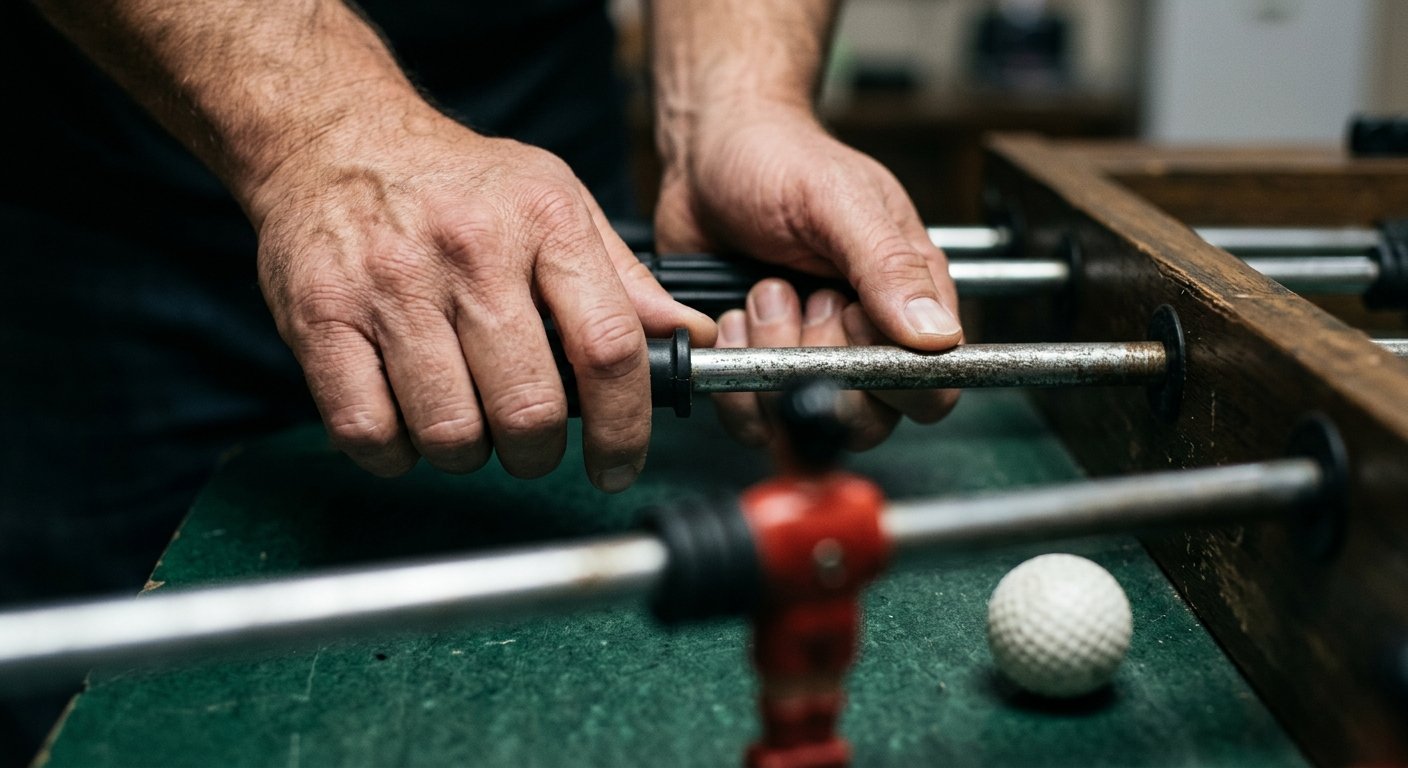
There are more than three ways to pass from the 5-bar, but these are the foundation. Get comfortable with all three and you’ll have an answer for every defensive alignment your opponent throws at you.
The foosball brush pass (sometimes called a lane pass or angle pass) uses a short lateral rod movement combined with a slight forward brush of the man’s foot to redirect the ball diagonally across the table into an open lane. Instead of pushing the ball straight ahead into a defender, you “brush” it at an angle — the ball appears to move one direction, then cuts. Done at speed, this pass is nearly invisible.
Key mechanics: Start with a pin — rest the ball against the wall or playfield by tilting the man’s toe down. Then, in one fluid motion, push the rod laterally one to two inches while lifting the toe to let the ball roll. The ball takes an angled path. Your partner’s 3-bar needs to be ready to receive it in the lane that just opened up.
The brush pass works best when you vary the lateral distance. Short brush (one inch) cuts across one lane; long brush (two-plus inches) skips two lanes. Practice both so your opponent can’t read your intent from rod movement alone.
The foosball wall pass sends the ball tight along the side wall of the table, sliding past the 3-bar defenders who tend to stay in the middle. It’s the simplest pass in the book — but executed with the right pin-to-release mechanic and timed to your opponent’s defensive positioning, it scores assists at every level of the game, including tournaments.
Setup: Pin the ball on the wall lane (the outermost lane, closest to the side rail). When your opponent’s 3-bar men are crowded toward the middle, release the ball with a clean forward tap along the wall. Your 3-bar’s outer man should be ready and waiting. Don’t telegraph this by always moving to the wall lane — mix it with a brush pass from the same pin position.
The foosball tic-tac pass is a lateral rapid-fire exchange between two of your own 5-bar men — side to side, back and forth — used to move the ball across the table while reading your opponent’s defensive rod movement. When they chase the ball in one direction, you pass the other. It’s chess at 200 milliseconds per move.
This is the hardest of the three to master because it demands both hands working together (or one very quick hand on a single-player setup) and genuine defensive reading. But it creates more open-lane opportunities than the other two passes combined, because you’re actively creating the gap rather than waiting for one.
| Pass Type | Best Used When | Hardest Part |
|---|---|---|
| Brush Pass | Opponent’s defense is static, centered | Consistent ball angle control |
| Wall Pass | Opponent’s men are crowded middle | Not telegraphing the lane choice |
| Tic-Tac Pass | Opponent’s defense is reactive | Reading defensive movement in real time |
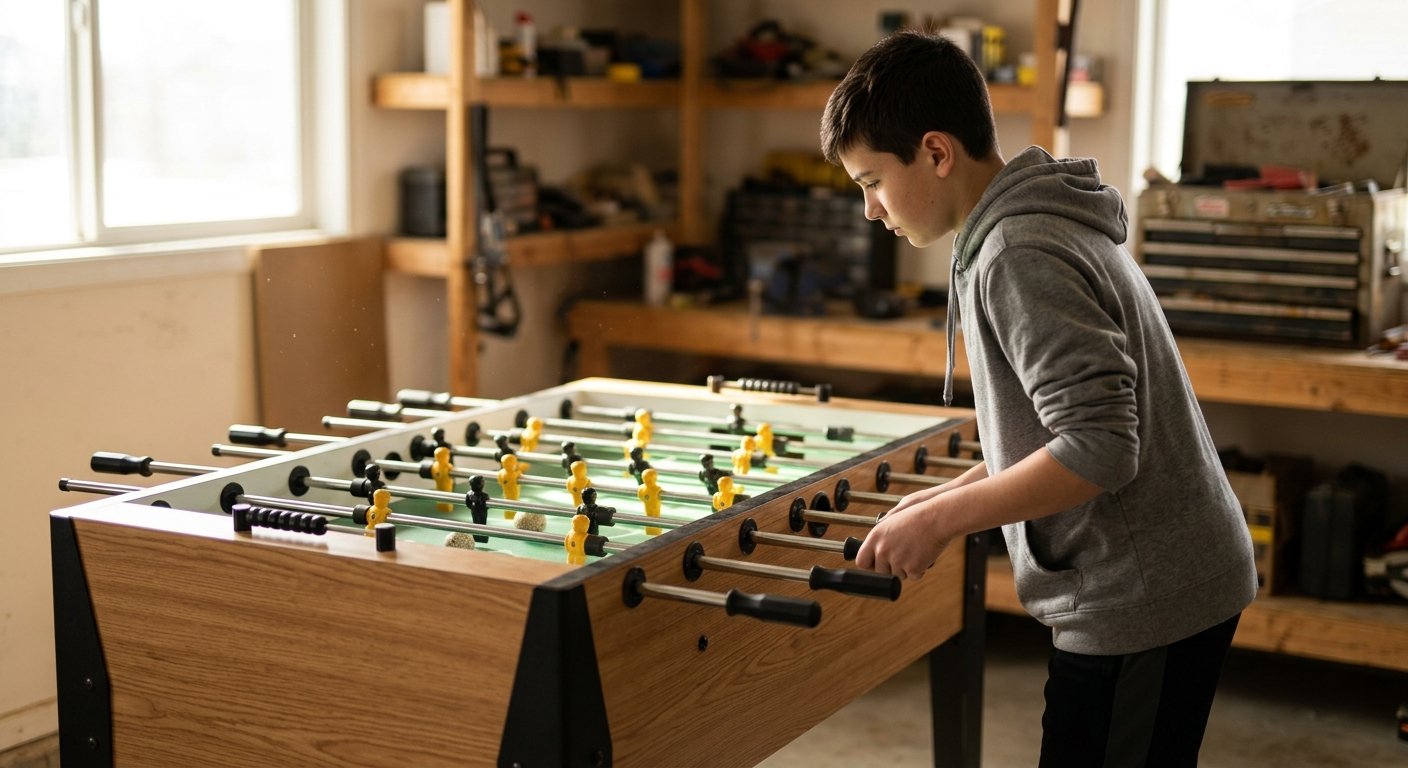
Reading about passes doesn’t build muscle memory. These drills do. Run each one for dedicated reps — ten to fifteen minutes per session — before you play any points. You’re training a motor pattern, not just thinking about it.
No opponent needed. Place the ball on one of your 5-bar men and practice pinning it (toe down, ball held still) for two seconds, then releasing it cleanly into a target lane. Do 20 reps to the wall lane, 20 reps to the middle lane, 20 reps to the far lane. This builds the pin habit — you can’t brush or tic-tac reliably if you can’t hold the ball first.
Partner up. Your partner controls the 3-bar and calls out “wall,” “middle,” or “lane two.” You execute a brush pass from a pin to hit the called lane. Your partner practices receiving the catch (stopping the ball dead) before shooting. Run 15 minutes alternating who calls the lane. This trains both the passer and the finisher.
Play half-games where you’re only allowed to score off a wall pass from the 5-bar. Your opponent knows it’s coming and will defend accordingly — forcing you to perfect your timing and pin position under pressure. Three games of five points each. This is uncomfortable at first. That’s the point.
Your partner controls just the 3-bar defensive rod and moves it left and right randomly. You tic-tac on the 5-bar and pass when you see the gap. No shooting — just pass to clear the 3-bar. Do 10 minutes of this. Your eye will start tracking the 3-bar rod subconsciously, which is exactly what you want in a real game.
A “series” in foosball means a planned sequence: 5-bar pin → specific pass type → 3-bar catch → specific shot. Pick one series (for example: pin, brush pass to lane two, catch, pull shot). Run it 30 times. Count how many result in a clean catch on the 3-bar. Aim for 80 percent catch rate before moving to the next series in your practice plan.
These drills are designed for a tournament-grade Tornado table, the US competitive standard. The consistent ball response and rod tension on a Tornado make your muscle memory transferable to match play. If you’re practicing on a wobbly bar-top table, your reps won’t translate as cleanly — something to keep in mind when choosing where to train.
All three passes become dramatically more effective when you read your opponent’s 3-bar before committing. Here’s the core rule: look at the gaps, not the men. Your opponent’s three men leave two open lanes and two partial lanes. The moment you pick up the ball, glance at where those gaps are. If the middle gap is wide open, a brush pass into it is almost automatic. If the defense is floating toward the middle, the wall is open.
According to research on perceptual-cognitive skill in fast-action sports published by sport science programs, anticipatory gaze — looking at where space will be rather than where the ball is now — is a hallmark of expert-level performance. Foosball is no different. The best 5-bar passers aren’t faster; they see the gap half a second earlier.
The practical drill: spend five minutes just watching your opponent’s 3-bar move while you hold the ball. Don’t pass yet. Narrate to yourself what you see — “gap on the wall,” “crowded middle,” “floating left.” This builds the observation habit before you layer in the execution.
Once your passing mechanics are sharp in isolation, the real test is applying them under pressure. In a DYP (draw-your-partner, a one-day open tournament format where partners are assigned by draw), you may play with a partner whose 3-bar you’ve never seen before. A consistent, readable 5-bar pass makes you an easy partner to work with — your 3-bar knows where the ball is going.
Check the Foos Central tournament calendar for upcoming events in South Florida. Boca Raton, Fort Lauderdale, West Palm Beach, and Miami all have active foosball communities with regular DYPs and open events — real table time against real players is the fastest way to pressure-test a passing game you’ve been drilling.
And if you’re introducing foosball to a younger player, the Foos Central Youth Program puts tournament-grade Tornado tables directly into South Florida schools. Teaching a kid to pin and brush pass before they ever learn to spray-and-pray is how you build the next generation of players who actually know what they’re doing.
A brush pass is a 5-bar technique where you pin the ball with one of your mid-field men, then simultaneously move the rod laterally and release the ball with a slight forward brush, sending it at a diagonal angle into an open lane. It’s used to bypass a statically positioned defensive 3-bar and set up a clean shot opportunity.
Start with isolated pin-and-release drills before adding pass direction, then partner drills where you hit called target lanes. Progress to pressure drills where your opponent knows what’s coming and defends it. Consistent, focused practice in 10-15 minute blocks builds muscle memory faster than hours of casual play.
A wall pass sends the ball along the side rail of the table in a single motion, exploiting a gap when the opponent’s defense is centered. A tic-tac is a lateral back-and-forth exchange between your own 5-bar men designed to move the defense before committing to a pass direction. The tic-tac is reactive; the wall pass is positional.
Absolutely — and the sooner the better. The pin-and-release mechanic is the foundation, and it can be learned in a single practice session. Beginners who start with proper 5-bar habits avoid the spray-and-pray style that’s hard to unlearn later. The wall pass is the easiest to learn first; add the brush pass and tic-tac as control improves.
Yes, to a meaningful degree. Tournament-grade tables like the Tornado have consistent rod tension, ball response, and surface friction, so the muscle memory you build transfers directly to competitive play. Practicing on a significantly different table can create habits that don’t carry over. For serious players, training on the same table style you compete on is worth the effort to find.
The reps only count if you’ve got a real table — find one near you, register for an upcoming tournament, or help bring tournament-grade Tornado tables to a school through the Youth Program.
Grow the game
We put tournament-grade Tornado tables where kids can reach them. Bring the Youth Program to a school near you, or find a table and play tonight.