
Foosball Wall Pass vs. Brush Pass
The wall pass and the brush pass are the two fundamental ways to move the ball from your 5-bar (midfield rod) to your 3-bar…
Regular foosball table maintenance — cleaning the rods, lubricating with silicone spray, replacing worn men, and leveling the playfield — directly affect...
Regular foosball table maintenance — cleaning the rods, lubricating with silicone spray, replacing worn men, and leveling the playfield — directly affects how fast and accurate your shots are. Neglect a table for a few months and you’ll fight the equipment instead of your opponent. Stay on top of it and every shot rolls cleaner, every pass lands truer, and the table lasts decades instead of years.
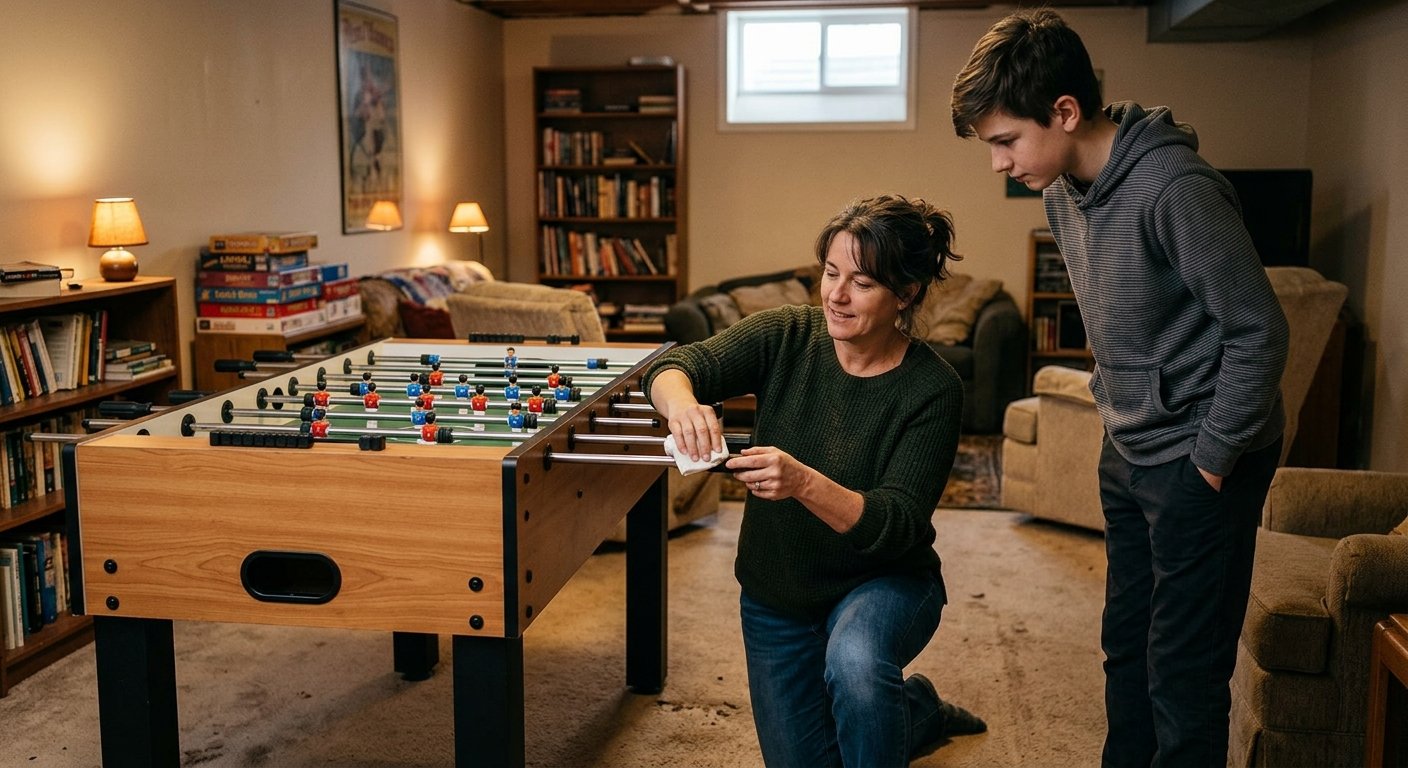
Most players treat table maintenance the way most people treat car oil changes — they think about it after something goes wrong. A sticky rod mid-match, a goalie man that spins freely instead of locking, a playfield so tilted that every unattended ball rolls to one corner. By that point, bad habits have already crept into your game, because you’ve been unconsciously compensating for the table’s flaws rather than developing clean mechanics.
Think of it this way: if you practice the pull shot (a lateral sliding rod movement that snaps the ball into the corner) on a sticky, under-lubricated rod, your muscle memory is calibrated to fight friction that shouldn’t exist. The first time you play on a tournament-grade Tornado in tournament conditions, everything feels foreign. Maintenance isn’t housekeeping. It’s part of training.
Practicing on a neglected table is like lifting weights with a broken form — you’re building the wrong thing.
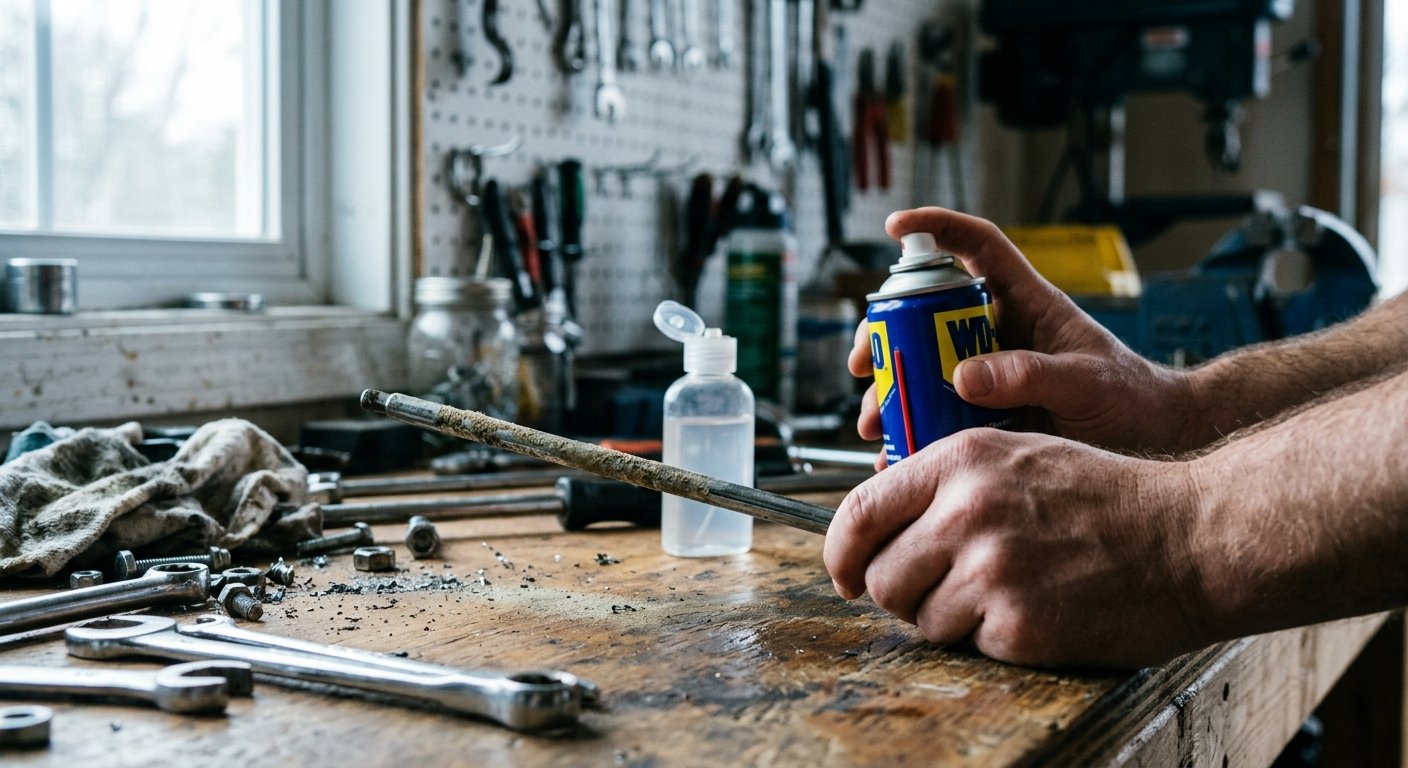
The single most common maintenance mistake: using WD-40. It’s everywhere, it smells like competence, and it will absolutely ruin your rods over time. WD-40 is a water displacer and light solvent, not a lubricant — it strips existing protection, attracts dust and chalk, and leaves rods stickier within days. Same goes for petroleum-based oils, cooking spray, and anything thick or greasy.
The correct answer is 100% silicone spray — no additives, no PTFE (Teflon) blend. Pure silicone is what Tornado recommends for its own tables, and it’s what the Tornado / Valley-Dynamo documentation points to. A light coat on each rod, worked in by sliding and spinning the rod through its full range of motion, is all you need. Wipe the excess off the rod before it migrates onto the playfield — silicone on the playing surface affects ball roll in ways you don’t want.
Never spray lubricant directly toward the playfield or men. Always spray onto a rag or cloth first, then apply to the rod — or spray the rod end away from the table and work it inward. Silicone on the ball changes its grip and makes consistent passing close to impossible.
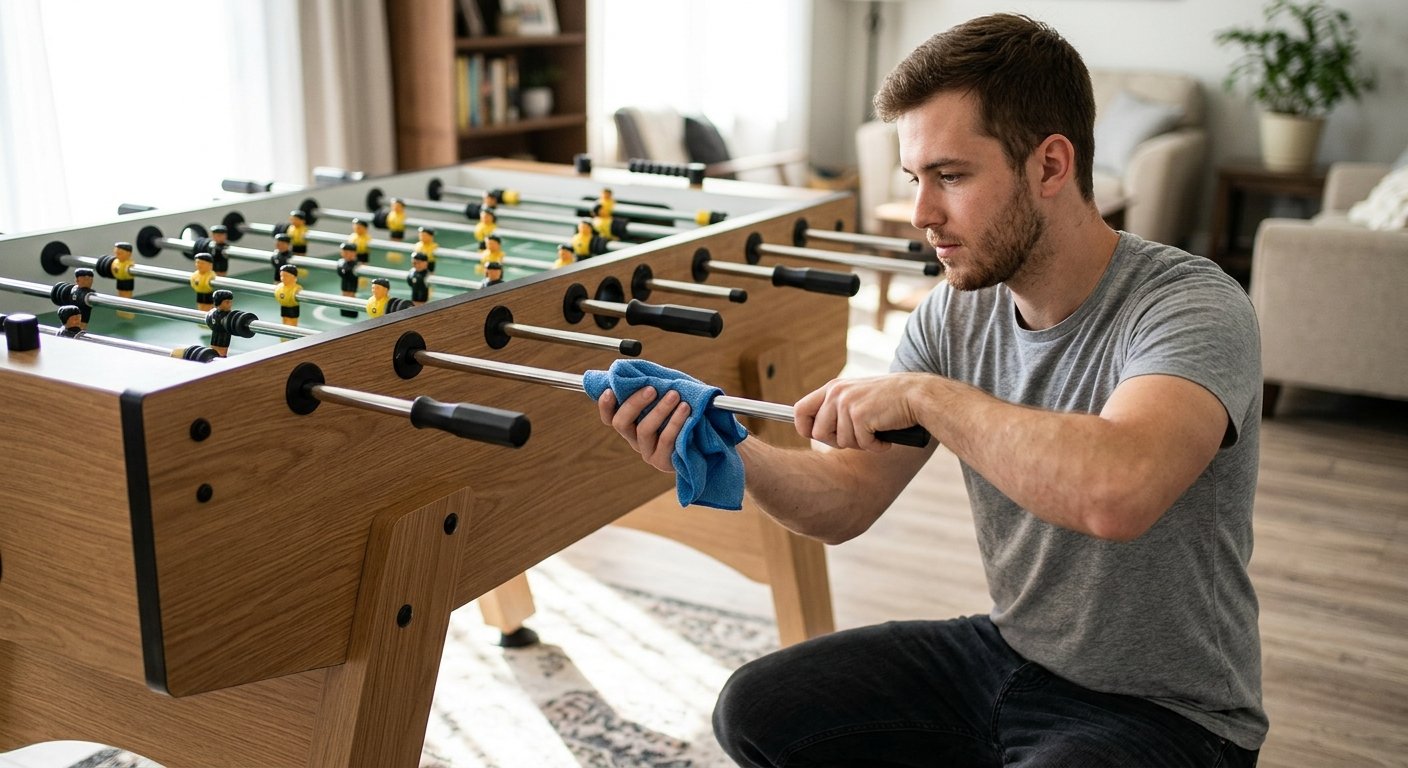
Work on a table without anything rolling around. Pull out the goalie, 2-bar, 5-bar, and 3-bar rods if you’re doing a deep clean, or work rod by rod for a maintenance pass.
Remove old lubricant, dust, and any oxidation. If the rod has visible rust spots (common on older or outdoor tables), fine steel wool — used very gently — can clean them up before you re-lubricate.
Light coat, full rod length. Slide and rotate the rod through its range of motion 10–15 times to work the lubricant into the bearings on both sides.
The rod should feel smooth and fast — not wet or slippery to the touch. Excess lubricant drips onto the cabinet and playing surface over time.
Plastic end-bumpers prevent the rod from sliding out of the table. If they’re cracked or missing, the rod has too much lateral play — order replacements. Tornado parts are widely available through authorized dealers.
Rods get all the attention, but the playfield surface is just as important. A worn, dirty, or warped playing surface changes ball speed unpredictably and creates dead zones. Wipe down the playfield with a slightly damp cloth (no harsh chemicals) after every heavy session. For deeper cleaning, a mild soap solution works — just dry it completely before play.
Foosball men take a beating. Chipped men develop sharp edges that catch the ball erratically; a missing chunk on the toe of a 3-bar (offensive) man throws off your pin shot (where you pin the ball to the playfield with a man before shooting). On a Tornado table, replacement men are straightforward to swap — you drive the roll pin out with a pin punch and hammer, slide the worn man off the rod, and slide the replacement on. If you run a school program or a venue, keep a small stock of replacement men on hand. Our Youth Program puts tournament-grade Tornado tables in South Florida schools, and part of what makes those tables last is a simple parts-on-hand policy.
Check your balls regularly. Foosball balls wear smooth over time — a smooth ball slides on the playfield instead of rolling true, which destroys your passing game. Tornado balls have a textured surface that matters. Replace them when they look glassy. A pack of official Tornado balls costs very little compared to the improvement in play.
A bubble level placed at the center of the playfield should show dead-level in both directions. Most cabinet legs have adjustable feet — use them. On older tables, a worn cabinet or a slightly bowed playfield may require shims. A tilted table isn’t just annoying; it forces you to defend one side harder than the other and creates artificial ball paths that don’t translate to neutral tournament tables. The International Table Soccer Federation (ITSF) specifies level playfields in its tournament regulations — that standard exists for a reason.
| Product Type | Best For | Verdict |
|---|---|---|
| 100% Silicone Spray | All foosball rods and bearings | ✅ Recommended — use this |
| WD-40 | Loosening bolts, not lubrication | ❌ Avoid — strips rods, attracts dirt |
| Petroleum-Based Oil | Machine components with different tolerances | ❌ Avoid — gums up bearings over time |
| PTFE / Teflon Blends | Sometimes marketed for foosball | ⚠️ Use with caution — some formulations are fine, others attract grit |
| Dry Graphite Powder | Keyed locks, not recommended here | ❌ Avoid — messy and inconsistent on rods |
If you run a bar, game room, or club in Boca Raton, Fort Lauderdale, West Palm Beach, or Miami with foosball tables, maintenance isn’t optional — it’s your reputation. A sticky, beaten-up table tells players you don’t take the game seriously, and they’ll find somewhere else to play. A well-maintained table draws regulars, supports a league, and becomes a genuine revenue center.
The best-maintained venues in South Florida end up listed in our Where to Play directory, which pulls players specifically looking for quality tables. If you want to add or update your venue, submit your location here. Players notice the difference between a table that’s loved and one that’s been left to die — and they talk.
According to U.S. Consumer Product Safety Commission guidance on recreational equipment maintenance, regular inspection of mechanical components, moving parts, and surface conditions reduces both injury risk and equipment failure — principles that apply directly to commercial foosball tables in high-traffic venues.
100% silicone spray is the best foosball table lubricant. It’s slick, doesn’t attract dust or dirt, and won’t degrade rod finishes over time. Tornado’s own documentation recommends silicone. Avoid WD-40, petroleum-based oils, and anything greasy — they cause more problems than they solve.
For a heavily used venue or tournament table, every two weeks. For a home table played weekly, every four to six weeks. Light-use tables should still be lubricated at least every three months — rods can oxidize even without play, especially in humid climates like South Florida.
No. WD-40 is a water displacer and light solvent — not a lubricant. It temporarily reduces friction, then evaporates and leaves behind a residue that attracts grit. Within days your rods will feel worse than before. Use silicone spray instead.
Check for chipped or cracked men, especially on the toe (the part that contacts the ball). Sharp edges catch the ball unpredictably and make consistent shooting nearly impossible. If a man spins freely without resistance, the pin that locks it to the rod may be worn. Tornado replacement men are widely available and straightforward to install with basic tools.
Yes — directly. Smooth, fast rods let you execute the pull shot, push shot, and snake/rollover at the speeds they’re designed for. A level playfield means the ball behaves consistently, so your muscle memory calibrates to real conditions. Practicing on a neglected table builds compensations, not skills.
Browse our equipment resources, find a well-maintained table near you, or bring the Youth Program to your school so the next generation learns on tables that actually play right.
Grow the game
We put tournament-grade Tornado tables where kids can reach them. Bring the Youth Program to a school near you, or find a table and play tonight.